How to Generate Sales-Qualified Leads (SQLs) That Actually Convert
Saphiam TeamApril 2, 20267 min read
Introduction
Generating leads is easy.
Generating Sales-Qualified Leads (SQLs) that actually convert into paying clients is where most B2B companies struggle.
Many organizations invest heavily in marketing campaigns, outbound outreach, and digital advertising, yet their sales teams complain about poor lead quality.
The real issue? There is no structured system for identifying and qualifying serious buyers.
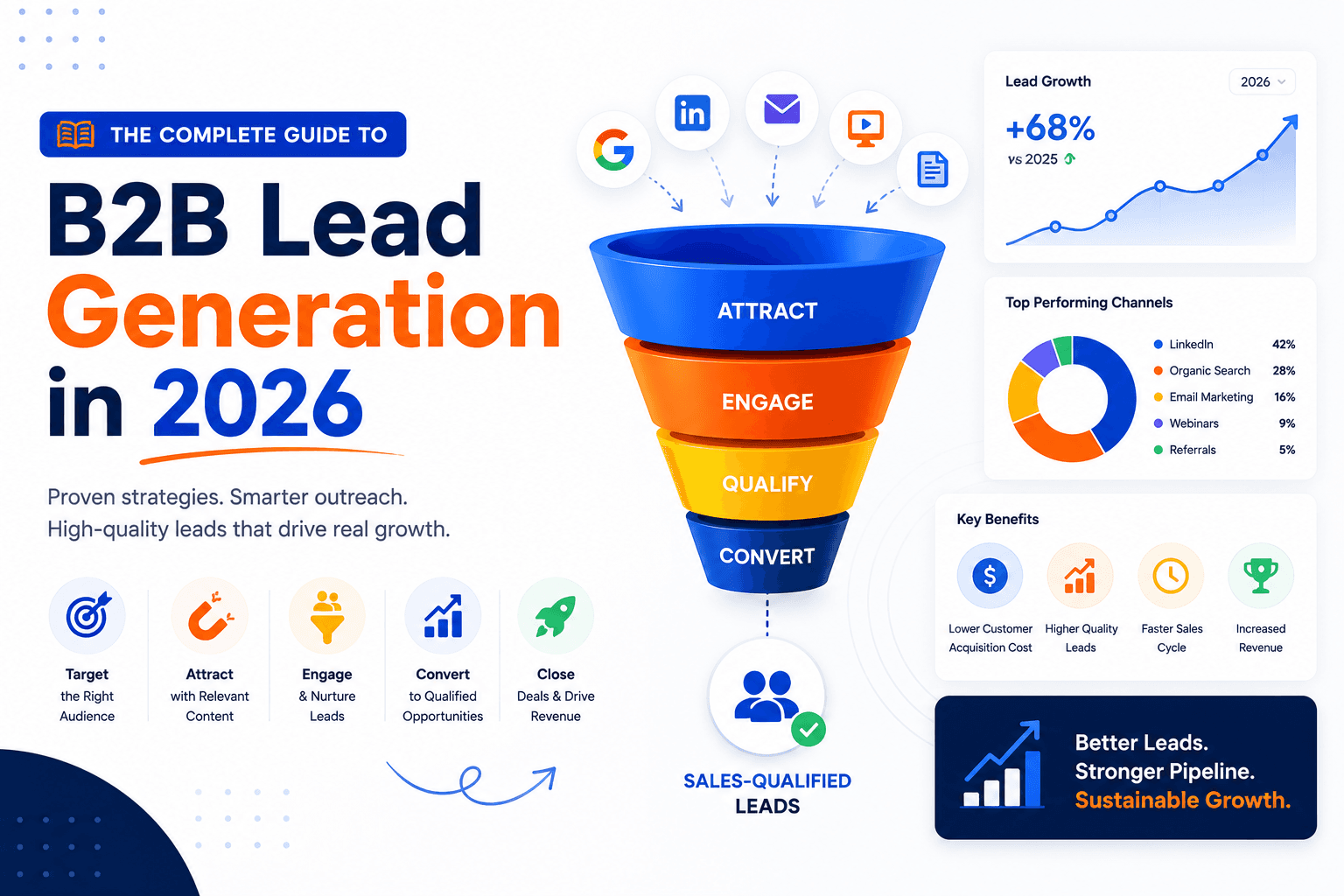
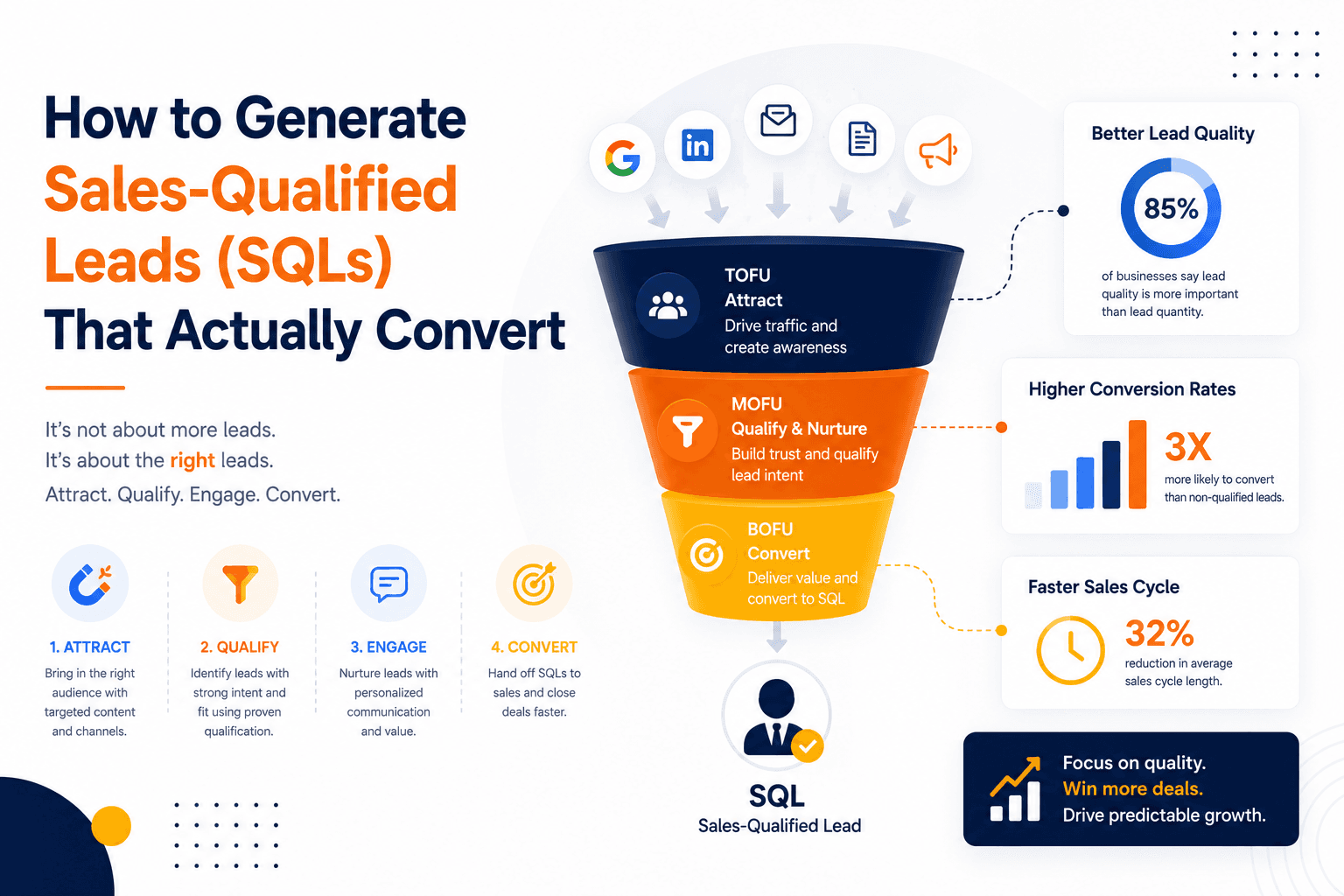
In this guide, we will break down how to generate high-converting Sales-Qualified Leads (SQLs) and build a predictable B2B revenue pipeline.
What Is a Sales-Qualified Lead (SQL)?
A Sales-Qualified Lead (SQL) is a prospect who:
- Matches your Ideal Customer Profile (ICP)
- Has a defined need for your solution
- Has decision-making authority
- Shows genuine buying intent
- Is ready for a sales conversation
Unlike Marketing-Qualified Leads (MQLs), SQLs are vetted and ready for direct engagement with your sales team.
The difference between MQLs and SQLs often determines whether your pipeline converts or collapses.
Why Most Leads Don’t Convert
Here is why many businesses fail to generate SQLs that convert:
- No clear ICP definition
- Weak lead qualification process
- Over-reliance on automation
- Lack of personalization
- Misalignment between marketing and sales
- Focusing on volume instead of intent
If your sales team spends time chasing unqualified prospects, productivity drops and close rates suffer.
The solution is structured qualification.
Step 1: Define a Precise Ideal Customer Profile (ICP)
Before generating SQLs, you must know exactly who you want to target.
Your Ideal Customer Profile should include:
- Industry vertical
- Company size
- Annual revenue
- Geographic region
- Technology stack (if relevant)
- Decision-maker roles
- Common pain points
The more specific your ICP, the higher your conversion probability.
Precision targeting leads to stronger conversations.
Step 2: Focus on Intent-Based Prospecting
Not every business in your ICP is ready to buy.
High-converting SQL strategies focus on intent signals such as:
- Hiring related roles
- Recently raised funding
- Technology adoption
- Website engagement behavior
- Content downloads
- Active LinkedIn engagement
When you approach prospects who show buying intent, response rates increase dramatically.
Step 3: Use Structured Lead Qualification Frameworks
To convert leads into SQLs, you need qualification criteria.
Popular Qualification Models
BANT Framework
- Budget
- Authority
- Need
- Timeline
CHAMP Framework
- Challenges
- Authority
- Money
- Prioritization
These frameworks ensure you only pass leads to sales when they meet clear buying conditions.
This protects your sales team’s time and improves close rates.
Step 4: Personalization at Scale
Generic outreach kills conversion.
High-performing SQL campaigns use:
- Personalized LinkedIn messages
- Tailored cold emails
- Industry-specific value propositions
- Case-study-driven messaging
- Custom problem statements
When prospects feel understood, they engage.
Personalization builds trust, and trust drives conversions.
Step 5: Multi-Channel Engagement Strategy
Modern B2B buyers require multiple touchpoints before responding.
An effective SQL generation strategy includes:
- LinkedIn outreach
- Cold email sequences
- Strategic follow-ups
- Value-based content sharing
- Direct phone conversations (for enterprise deals)
Consistent, professional follow-up often makes the difference between a lost opportunity and a closed deal.
Step 6: Align Sales and Marketing Teams
SQL generation is not just a marketing responsibility.
Successful organizations:
- Define SQL criteria together
- Share feedback on lead quality
- Track conversion data collaboratively
- Optimize campaigns based on sales outcomes
When marketing and sales operate as one growth unit, conversion rates increase significantly.
Step 7: Track Metrics That Matter
To generate SQLs that convert, monitor:
- Response rates
- Meeting booking rates
- SQL-to-opportunity conversion
- Opportunity-to-close ratio
- Customer acquisition cost (CAC)
- Revenue per lead
Data reveals weaknesses and opportunities.
Continuous optimization transforms lead generation into a revenue engine.
Common Mistakes That Reduce SQL Conversion
Avoid these critical errors:
- Passing unqualified leads to sales
- Weak follow-up systems
- Ignoring prospect objections
- Poor CRM management
- Not tracking campaign analytics
Lead generation without measurement is guesswork.
How Saphiam Technologies Generates High-Converting SQLs
At Saphiam Technologies, we focus on:
- Deep ICP development
- Intent-based account targeting
- Multi-channel outreach systems
- Structured SQL validation
- Appointment setting with decision-makers
- Continuous performance tracking
We don’t deliver raw leads. We deliver sales-ready opportunities aligned with your revenue goals.
Our goal is simple: build predictable pipelines that convert into measurable business growth.
Conclusion
Sales-Qualified Leads are the foundation of successful B2B growth.
Without structured qualification, businesses waste time, budget, and momentum.
With the right strategy, personalization, and performance tracking, SQL generation becomes predictable and scalable.