The Complete Guide to B2B Lead Generation in 2026
Saphiam TeamMay 28, 20269 min read
Introduction
In today’s competitive global market, B2B lead generation is no longer about collecting contact details. It is about building predictable revenue systems.
Decision-makers are more informed, sales cycles are longer, and competition is stronger than ever. Businesses that rely on outdated outreach methods struggle with inconsistent pipelines and low conversion rates.
If your organization wants sustainable growth in 2026, you need a structured, data-driven B2B lead generation strategy that delivers sales-qualified leads (SQLs), not just marketing noise.
This guide breaks down everything you need to know.
What Is B2B Lead Generation?
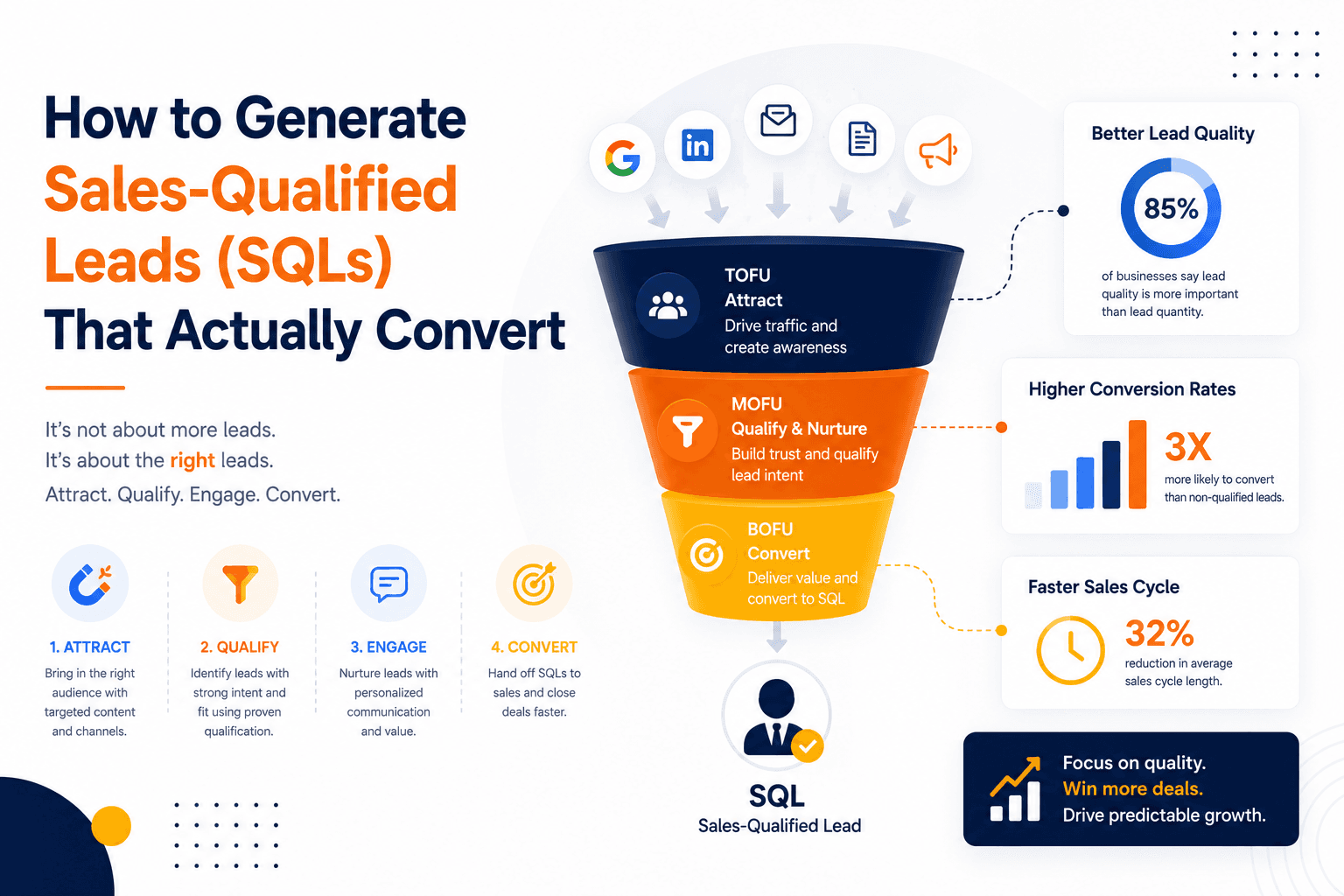
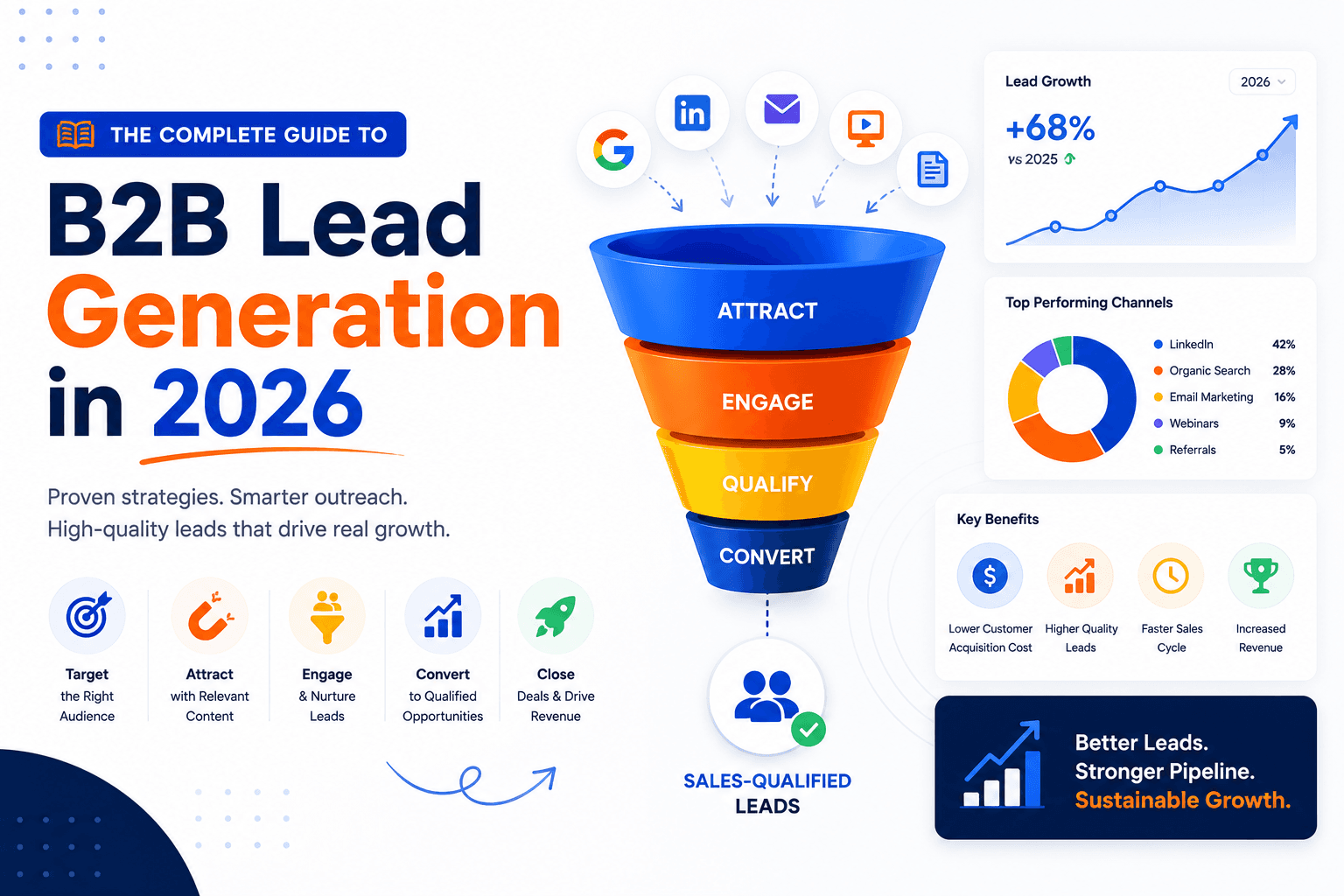
B2B lead generation is the strategic process of identifying, attracting, engaging, and converting business decision-makers into potential sales opportunities.
Unlike B2C marketing, B2B sales require:
- Targeted account selection
- Multi-touch outreach
- Relationship building
- Lead qualification frameworks
- Alignment between marketing and sales teams
The goal is simple: generate high-quality sales-qualified leads that convert into revenue.
Why Most B2B Lead Generation Fails
Many businesses fail because they:
- Target the wrong audience
- Skip ICP development
- Focus on volume instead of qualification
- Use single-channel outreach
- Ignore personalization
- Fail to nurture leads
Modern B2B buyers expect relevance, clarity, and value.
Without a structured system, lead generation becomes unpredictable and expensive.
Step 1: Define Your Ideal Customer Profile (ICP)
A successful B2B lead generation strategy starts with defining your Ideal Customer Profile.
Your ICP should include:
- Industry type
- Company size
- Revenue range
- Geographic location
- Decision-maker titles
- Buying triggers
When you target companies aligned with your ICP, conversion rates increase and sales cycles shorten.
Precision beats volume.
Step 2: Build a Multi-Channel Outreach Strategy
In 2026, single-channel prospecting is ineffective. You need multi-channel B2B outreach.
1. LinkedIn Lead Generation
LinkedIn remains the most powerful B2B platform for connecting with decision-makers.
Effective LinkedIn outreach includes:
- Profile optimization
- Personalized connection requests
- Value-based messaging sequences
- Consistent engagement
2. Cold Email Campaigns
Cold email remains highly effective when:
- Proper domain setup is implemented
- Emails are personalized
- Messaging is value-driven
- Follow-ups are structured
3. Strategic Cold Calling
For high-ticket enterprise sales, direct conversations accelerate trust and qualification.
A combination of these channels increases response rates significantly.
Step 3: Implement Lead Qualification Frameworks
Not every lead is ready to buy.
That is why Sales-Qualified Leads (SQLs) matter.
Use frameworks like:
- BANT (Budget, Authority, Need, Timeline)
- CHAMP (Challenges, Authority, Money, Prioritization)
Lead qualification ensures your sales team only speaks with serious prospects.
This improves:
- Sales productivity
- Close rates
- ROI on outreach campaigns
Step 4: Align Marketing and Sales Teams
One of the biggest challenges in B2B organizations is misalignment between marketing and sales.
Your marketing team should:
- Generate targeted leads
- Provide qualification insights
- Share campaign performance data
Your sales team should:
- Provide feedback on lead quality
- Share objection trends
- Close the loop on conversions
Alignment builds a consistent revenue engine.
Step 5: Track Performance and Optimize Continuously
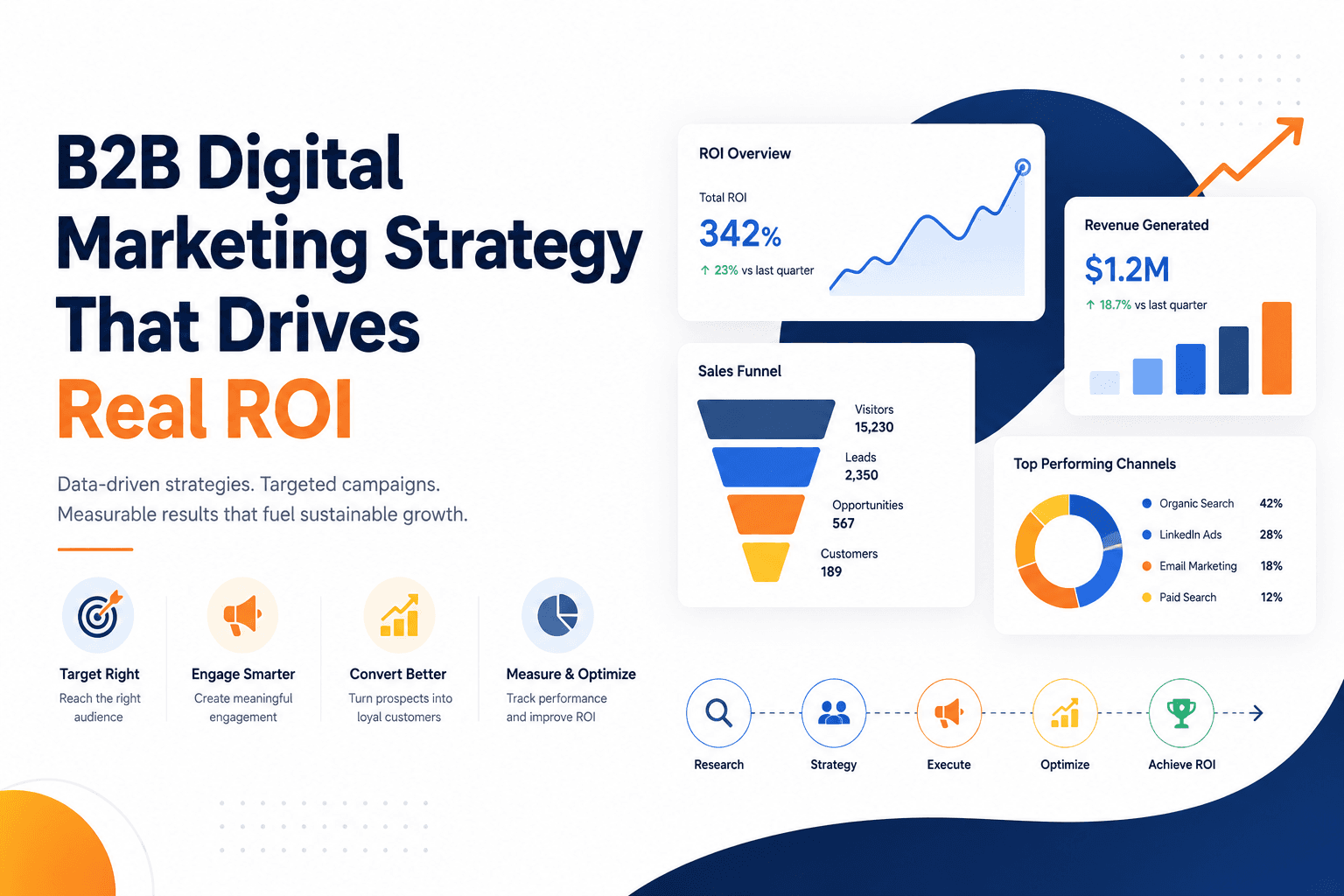
Data-driven lead generation is essential.
Key metrics to monitor:
- Open rates
- Reply rates
- Meeting booking rates
- SQL conversion rates
- Customer acquisition cost (CAC)
- Revenue per campaign
Optimization is not optional. It is continuous.
The Future of B2B Lead Generation
In 2026 and beyond, successful B2B companies will focus on:
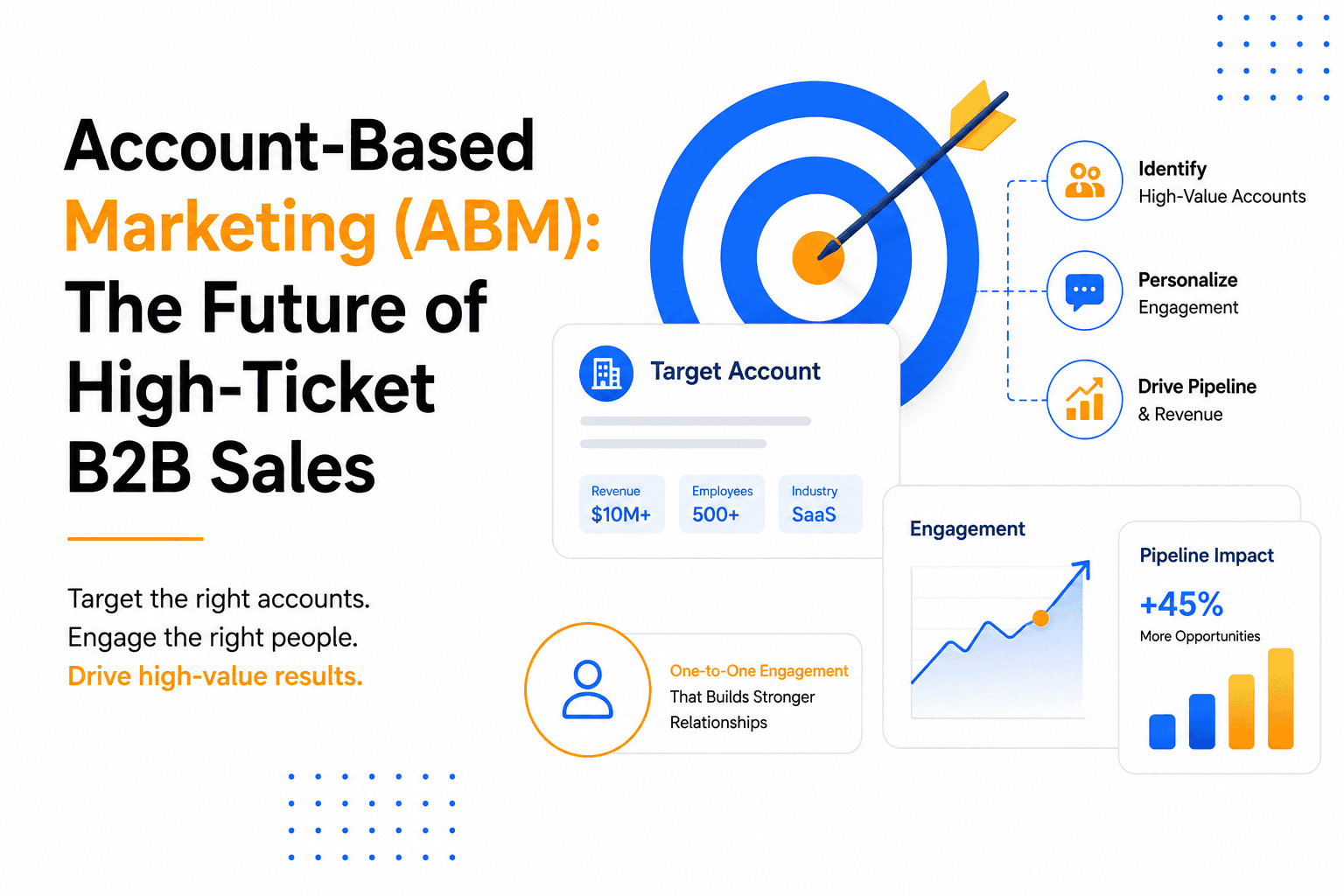
- Account-Based Marketing (ABM)
- Intent-driven prospecting
- AI-supported data analysis
- Personalization at scale
- Integrated sales and marketing workflows
The companies that treat lead generation as a structured growth system, not a random activity, will dominate their markets.
How Saphiam Technologies Builds Predictable Pipelines
At Saphiam Technologies, we design precision-based B2B lead generation systems tailored to your Ideal Customer Profile.
Our approach includes:
- Market intelligence and ICP development
- Multi-channel outreach execution
- Sales-qualified lead validation
- Appointment setting
- Performance tracking and reporting
We focus on delivering revenue-ready opportunities, not just contacts.
Conclusion
B2B lead generation in 2026 demands strategy, personalization, and data-backed execution.
If your business wants predictable growth, scalable outreach systems, and high-quality sales conversations, the time to build a structured approach is now.