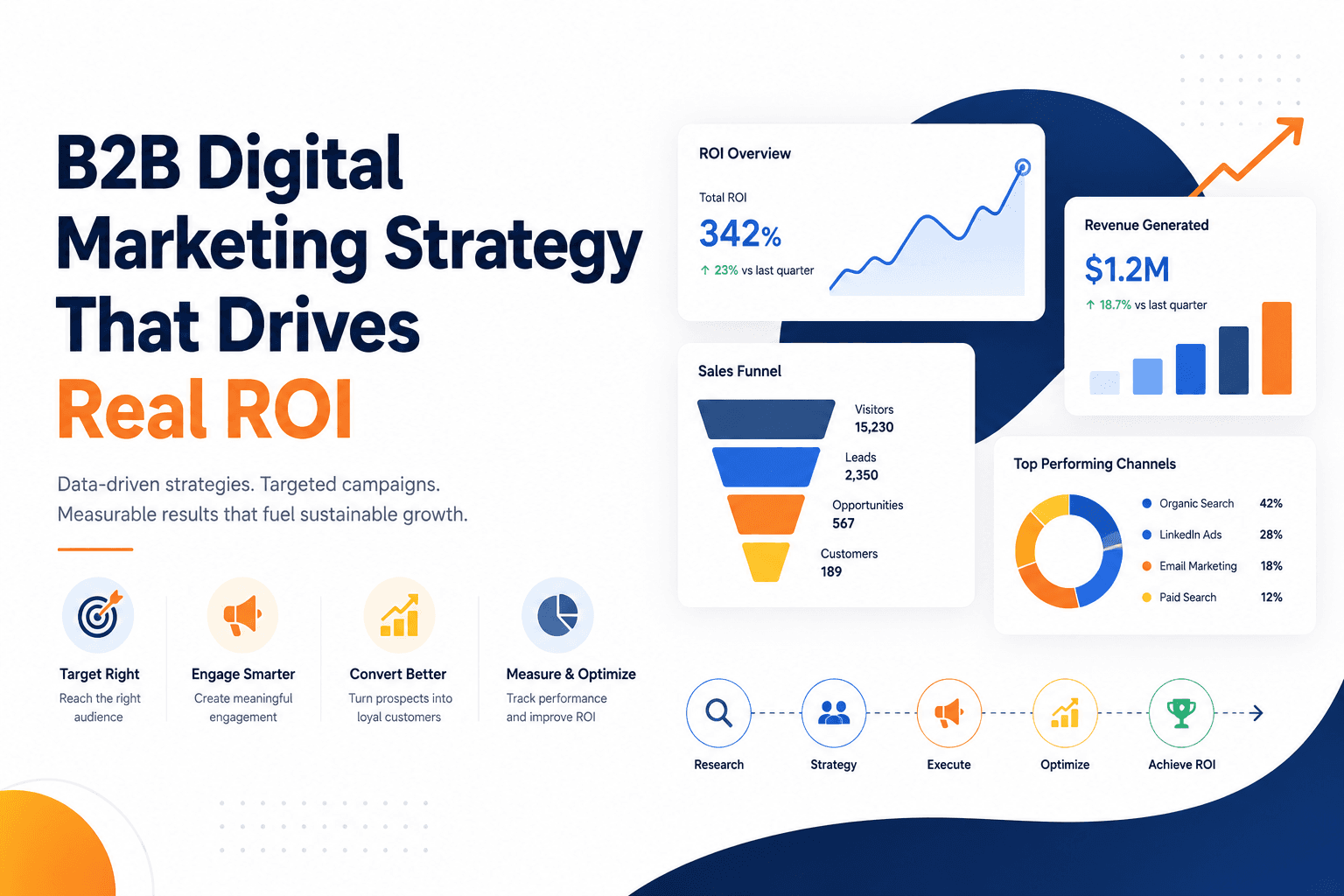
B2B Digital Marketing Strategy That Drives Real ROI
Saphiam TeamApril 30, 20268 min read
Introduction
Digital marketing for B2B companies is no longer about visibility alone. It is about measurable return on investment (ROI).
In 2026, decision-makers expect marketing teams to generate qualified leads, shorten sales cycles, and directly contribute to revenue growth.
However, many B2B organizations struggle with:
- Low website conversions
- Poor organic rankings
- Weak LinkedIn engagement
- Inconsistent inbound lead flow
- Unclear performance metrics
The solution is not more activity. It is smarter strategy.
This guide explains how to build a B2B digital marketing strategy that drives real, measurable ROI.
Why Traditional B2B Marketing No Longer Works
Modern B2B buyers:
- Research independently before contacting sales
- Compare multiple providers online
- Consume long-form content
- Expect personalization
- Prioritize credibility and authority
If your brand lacks strong digital positioning, you lose opportunities before conversations even begin.
A structured digital marketing system solves this problem.
Step 1: Build a Strong SEO Foundation
Search Engine Optimization (SEO) is the backbone of sustainable B2B digital growth.
When decision-makers search for services like:
Your website must appear.
Core SEO Elements for B2B Companies
- Technical SEO optimization
- Keyword research aligned with buyer intent
- On-page optimization (titles, meta descriptions, headers)
- Authority-building backlinks
- SEO-driven content marketing
Organic traffic generates high-intent inbound leads at lower acquisition costs over time.
SEO is not an expense. It is a long-term asset.
Step 2: Position Your Brand as an Authority
In B2B markets, trust drives decisions.
Authority is built through:
- Industry-focused blog content
- Case studies
- Thought leadership articles
- LinkedIn expertise positioning
- Whitepapers and insights
When your brand consistently provides value, decision-makers perceive you as a credible partner rather than just another vendor.
Authority reduces sales resistance.
Step 3: Leverage LinkedIn for B2B Growth
LinkedIn remains the most powerful B2B digital platform.
Effective LinkedIn marketing includes:
- Optimized company page
- Executive branding
- Strategic content publishing
- Engagement with industry leaders
- Targeted outreach campaigns
LinkedIn helps:
- Increase brand visibility
- Build professional credibility
- Generate direct inbound inquiries
- Support outbound lead generation efforts
For B2B enterprises, LinkedIn is not optional. It is essential.
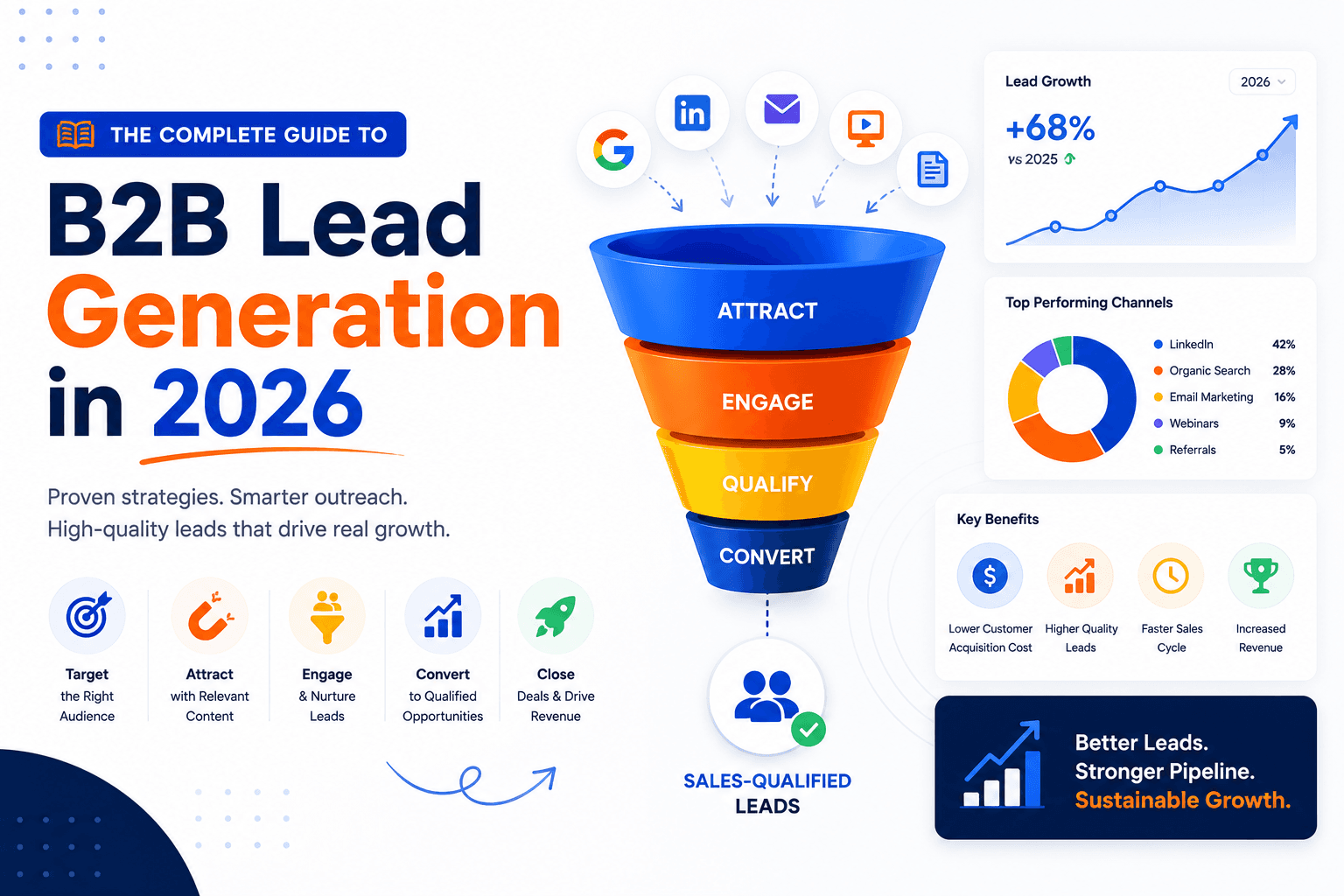
Step 4: Implement Funnel-Based Marketing
A high-performing B2B digital strategy aligns with the buyer journey.
Top of Funnel (Awareness)
- SEO blogs
- Educational content
- Social media insights
Middle of Funnel (Consideration)
- Case studies
- Industry comparisons
- Webinars
Bottom of Funnel (Decision)
- Strategy consultations
- Free audits
- Personalized proposals
Funnel alignment ensures that marketing efforts nurture prospects until they are ready to engage with sales.
Step 5: Focus on Conversion Optimization
Traffic without conversion is wasted potential.
Improve conversion rates through:
- Optimized landing pages
- Clear call-to-action buttons
- Lead capture forms
- Trust indicators (testimonials, certifications)
- Strategic content placement
Small conversion improvements can significantly increase ROI.
Step 6: Measure What Truly Matters
To drive real ROI, track meaningful metrics:
- Organic traffic growth
- Cost per lead
- Lead-to-opportunity conversion rate
- Customer acquisition cost (CAC)
- Marketing-generated revenue
- Return on ad spend (if applicable)
Data-driven marketing removes guesswork.
Optimization becomes continuous and strategic.
Common Mistakes in B2B Digital Marketing
Avoid these common errors:
- Inconsistent content publishing
- Ignoring technical SEO
- Focusing on vanity metrics (likes instead of leads)
- Poor targeting
- Lack of sales alignment
Digital marketing must be structured, not reactive.
How Saphiam Technologies Drives Measurable ROI
At Saphiam Technologies, we design performance-driven digital marketing systems for B2B enterprises across global markets.
Our approach includes:
- Strategic SEO implementation
- ICP-focused content marketing
- LinkedIn authority positioning
- Conversion-focused website optimization
- Performance analytics and reporting
We align digital strategy with revenue objectives, not just visibility metrics.
Our goal is simple: transform digital presence into predictable inbound growth.
The Future of B2B Digital Marketing
In 2026 and beyond, successful B2B brands will prioritize:
- Data-backed personalization
- AI-driven analytics
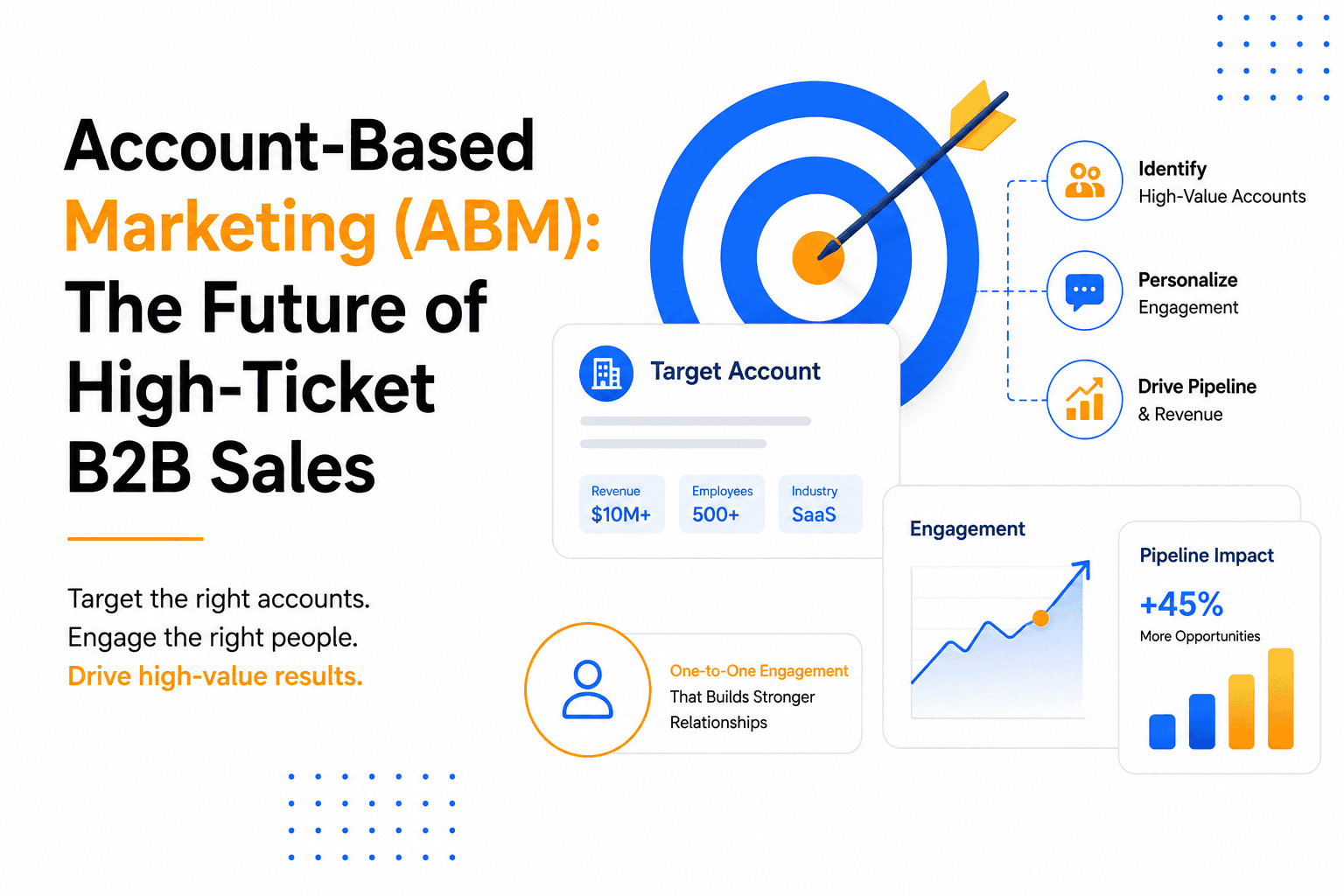
- Account-based marketing integration
- High-value content ecosystems
- Performance transparency
Digital marketing is evolving from branding to revenue engineering.
Companies that adapt will dominate their industries.
Conclusion
A B2B digital marketing strategy must be:
- Data-driven
- ICP-focused
- Authority-building
- Conversion-optimized
- Aligned with revenue goals
When executed strategically, digital marketing becomes one of the strongest growth engines for your business.